
What site prep does a metal building pad need in the San Antonio area?
Clearing, a compacted pad that sheds water, and the permits that reach the dirt before any steel arrives. In unincorporated Bexar County the Fire Marshal building permit covers site clearing, not only construction.
Read the rest
One acre of disturbed soil pulls in TCEQ stormwater coverage. On the Edwards Aquifer recharge zone, clearing is itself a regulated activity. Inside San Antonio a tree application comes before any development of the property.
Ready to build? An independent local contractor who works your county prices the building. The estimate costs you nothing, now or later, whatever you decide.
What happens on the lot before the slab is poured?
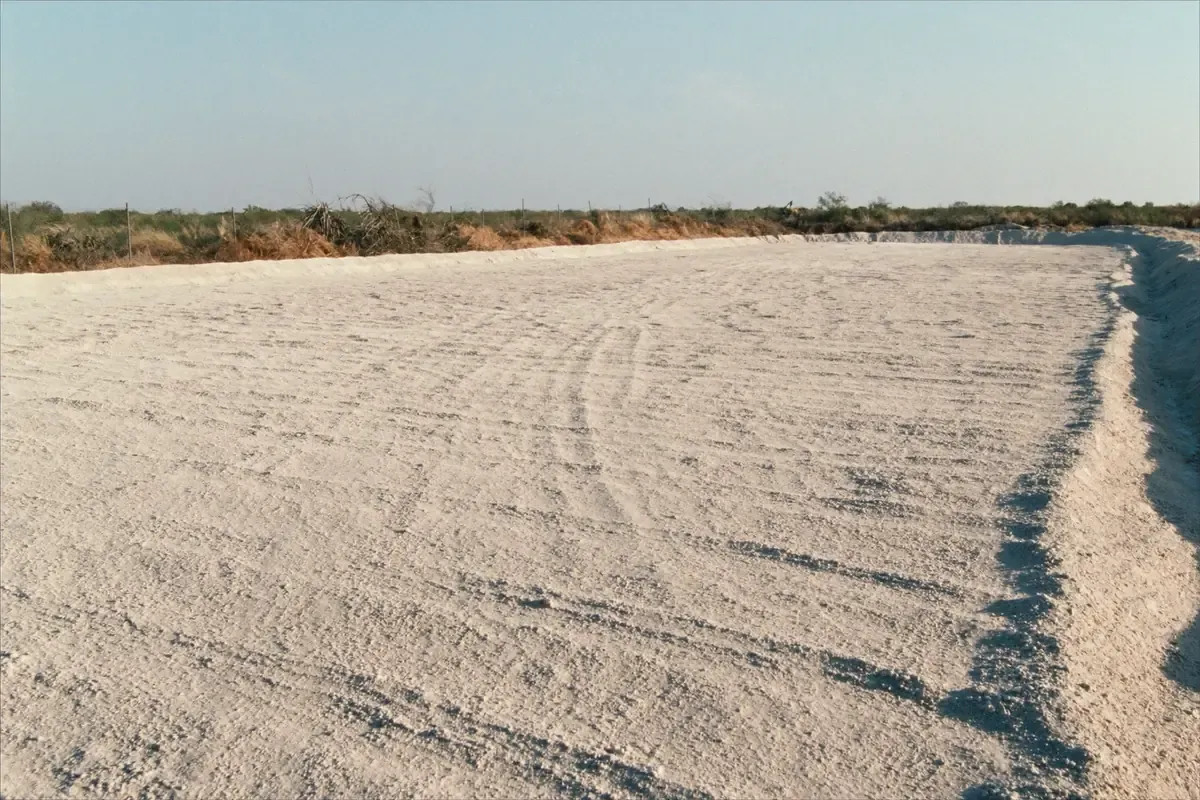
Four things in this order: permission to disturb the ground, clearing, earthwork that puts the finished floor above the water crossing the lot, and a pad the slab can be built on. The order matters because several of the permits here reach the clearing and the grading rather than the building. In unincorporated Bexar County the Fire Marshal permit covers site clearing, constructing, renovating or changing the occupancy of a building.
The building sets the pad, so the footprint, the doors and the finished floor elevation are settled first. Moving a pad after it is cut is a second earthwork job, and a commercial metal building with parking and a truck approach commits far more of the lot than a shop does. No pad thickness or fill quantity appears on this page. Those come off a survey and a soil report for your tract.
Source: Bexar County, building permits and fire marshal code enforcement pages, read 2026-09-13.
Do I need a permit before clearing the lot?
In unincorporated Bexar County, yes, and the clearing sits inside the building permit. What each county site shows, read on 2026-09-13:
Bexar County. The Fire Marshal Office decides when building permits are required for structures or areas not for single-family dwelling use, and that permit covers site clearing. Public Works also lists a storm water quality permit at $500 where one acre or more of soil is disturbed, and a post construction permit at $50 or $250 on the same trigger. Public Works, 210-335-6700.
Guadalupe County. The Fire Marshal fee schedule effective February 1, 2026 sets a site preparation and foundation permit at $500.00, separate from the building permit the county requires before anyone constructs or substantially improves a commercial establishment or public building outside a city. Fire Marshal Office, 830-303-8856.
Wilson County. The development permit is $100 per application, and a drainage study is required where the development footprint is three acres or more. No page read on the county site names a county building permit for a commercial structure. Permitting and Development, 830-393-8357.
Atascosa County. A building permit is required outside city limits before a new commercial or public building, issued by the Fire Marshal after plan review. The county document read does not name clearing or grading as separate permitted work. Fire Marshal, 830-769-2029.
Medina, Karnes and Frio counties. None publishes a county building permit for a commercial structure on any page read, and none publishes a clearing or grading permit. That is what their sites show, not permission to move dirt without asking. Medina County, 830-741-6000. Karnes Special Projects and Permits, 830-780-3511. Frio Road and Bridge, 830-505-7402.
Source: Bexar County, building permits and fire marshal code enforcement pages, read 2026-09-13.
Do I need a tree permit before clearing in San Antonio?
A tree application is submitted before any development of property inside the city, which makes it a site-prep step rather than a building step. Where the work removes trees or disturbs vegetation, a tree preservation plan goes in with it under Unified Development Code section 35-523, and a tree affidavit takes its place where the site has no protected trees. A commercial tree permit is $175.00 per acre plus a $25.00 per acre canopy enhancement fee, the plan review is $100.00, and starting site work without the permit carries a penalty fee.
Outside city limits but inside a city extraterritorial jurisdiction, the tree paperwork still comes from a city. Bexar County Public Works states that tree, irrigation and signage permits come from the city whose extraterritorial jurisdiction the property lies in, and that a property in the San Antonio extraterritorial jurisdiction also needs a City of San Antonio Storm Water Review stamp on the Permit Verification Form and the site plan. The city tree pages say nothing about whether the tree rules themselves reach that area, so that is a call to make rather than a rule to assume.
Source: City of San Antonio Development Services, tree preservation, read 2026-09-13.
Source: City of San Antonio Development Services, FY 2026 development fee schedule, read 2026-09-13.
Source: Bexar County, building permits, read 2026-09-13.
Three jobs pad grading has to do
All three are about water and movement rather than about the building.
Elevation. The finished floor sits high enough that sheet flow across the lot passes the building instead of reaching the door. Where the floodplain touches the tract, the county floodplain office sets what the elevation has to meet.
Bearing. Cut and fill are compacted to what the engineered foundation plan calls for, and the pad runs past the building line so the slab edge is not sitting on the shoulder of the fill.
Drainage. The ground falls away from the slab on every side. A metal roof delivers water fast and in volume, so where that water lands is part of the grading plan, not something to fix later with a shovel.
What will the machines hit under the pad?
One of three things, and it changes inside a single county. Grouped by what it does to a pad, from each county's own published survey, read 2026-09-13:
Rock near the surface. North Bexar County: a clayey surface a few inches to about 10 inches thick over hard, fractured limestone (Soil Survey of Bexar County, 1966). North Medina County: shallow soils over interbedded limestone and marl, with caliche mined in places for road material (Medina County, 1977). Atascosa County: Hindes soils formed over beds of caliche (Atascosa County, 1980). Limestone within 40 inches of the surface over part of Karnes County, and Frio County loam underlain by limestone (Handbook of Texas Online, an encyclopedia entry rather than a primary survey).
Shrink-swell clay. The eastern and western uplands of Bexar County are deep, slowly permeable clay that opens wide cracks when it dries (1966). Close to half of Guadalupe County is deep clay, and the survey rates one association, about 22 percent of the county, very high for shrink-swell (1977). Atascosa County's largest soil unit names shrinking and swelling, corrosivity to uncoated steel and low soil strength as its main limitations (1980), and a Wilson County association names shrink-swell and corrosivity to uncoated steel pipe (1977).
Sand. South Bexar County is sand over clay (1966). About 20 percent of Wilson County is a sand belt, and there is no hard limestone shelf under that county at all (1977). About 13 percent of Guadalupe County is sandhills (1977), and about 17 percent of Atascosa County is sandy soils whose permeability runs from moderately slow to rapid (1980).
What does that ground do to the pad?
It pushes the cost in two directions, and which one you get is a matter of a few miles. Shrink-swell clay moves with moisture, which is what makes drainage away from the slab structural rather than cosmetic. Rock and caliche at pad depth do the reverse: cutting becomes breaking. Both are foundation questions as much as pad questions, and the two get designed together in concrete slab and foundation for a metal building.
When does the earthwork need stormwater coverage?
At one acre of disturbed soil. Construction that discharges stormwater to surface water in the state and disturbs one acre or more needs coverage under the TCEQ construction general permit, and the operator develops and implements a stormwater pollution prevention plan before construction starts. The measure is disturbed soil, not building footprint: a shop well under an acre, with a long drive, a laydown area and a parking pad, can cross the line while the building never changes size.
Five acres or more is large construction. The primary operator submits a Notice of Intent through the STEERS system before work begins and files a Notice of Termination within 30 days of final stabilization. The fee is $225 electronic and $325 paper.
One acre to under five is small construction. No Notice of Intent. A signed small construction site notice is posted at the site and a copy goes to the storm sewer operator at least two days before construction begins.
Under one acre, and not part of a larger common plan of development or sale, is not regulated by the permit. The general permit is effective March 5, 2023 and expires March 5, 2028.
Source: Texas Commission on Environmental Quality, construction stormwater general permit TXR150000, read 2026-09-13.
Source: Texas Commission on Environmental Quality, general permit TXR150000, fees, read 2026-09-13.
Is clearing a regulated activity on the Edwards Aquifer?
On the recharge zone, yes, and this is the most important line on the page for a site in Bexar or Medina County. TCEQ requires an approved Edwards Aquifer protection plan before construction begins on the recharge, transition or contributing zone, and in the San Antonio region the program pages name Bexar, Medina, Comal, Uvalde and Kinney counties.
On the recharge zone any regulated activity needs an approved water pollution abatement plan, and TCEQ names clearing and excavation in that list alongside the construction of buildings, roads and utility stations, and any activity that alters or disturbs the topographic, geologic or existing recharge characteristics of a site. On the contributing zone a plan is needed only where the activity disturbs at least five acres or is part of a larger plan of development or sale. Stormwater coverage does not release the ground: the construction general permit states that work at a regulated site may not begin until the plan is approved.
Impervious cover decides several of the private-residence cases, and TCEQ counts a concrete pad and a driveway in it along with rooftops, sheds and sidewalks, so the apron and parking around a home-lot metal shop or workshop is a permitting question over the recharge zone, not only a budget one. Only portions of the aquifer are regulated, and TCEQ points to its own map viewer to settle whether a site sits over one. Run that lookup before an earthwork bid means anything.
Source: Texas Commission on Environmental Quality, Edwards Aquifer Protection Program, read 2026-09-13.
Source: Texas Commission on Environmental Quality, Edwards Aquifer Protection Program, what plans you might need, read 2026-09-13.
Source: Texas Commission on Environmental Quality, general permit TXR150000, part II, read 2026-09-13.
Source: Texas Commission on Environmental Quality, Edwards Aquifer private residences, read 2026-09-13.
Does the floodplain reach the grading?
It does, and most of these counties say so in their own definition of development, in the words filling and grading. Bexar County Public Works reviews all construction activities on property in proximity to the 100-year floodplain, a flood study by a professional engineer may be required, the fee is $50 per activity, and the county application names clearing and grading, placement of fill, excavation, a driveway, culverts, drainage structures, a parking lot, septic and utilities among the triggers. The other six, read at each county site on 2026-09-13:
Medina County: a permit for any man-made change to real estate in the floodplain, naming filling, grading, paving and storage of materials. Environmental Health, 830-741-6195.
Wilson County: a determination fee of $100.00, $300.00 inside a Special Flood Hazard Area, a $500.00 drainage review and a $200.00 elevation certificate review where either applies. Permitting and Development, 830-393-8357.
Guadalupe County: development defined to cover filling, grading, paving, excavation and drilling, on a five-step process ending in a certificate of compliance. Environmental Health, 830-303-8858.
Atascosa County: the Emergency Management Coordinator is the Floodplain Administrator, and the fee schedule sets a commercial floodplain permit at $200 against $25 residential. 830-769-3093.
Karnes County: a floodplain development permit named in the subdivision and development rules approved May 30, 2013, with no standalone page, no fee and no named administrator published, and the floodplain question routed to the county development permit application. 830-780-3511.
Frio County: a Flood Damage Prevention Ordinance dated May 23, 2016 requiring a permit for all development within the community, on an application covering non-residential structures explicitly. 830-326-3281.
Source: Bexar County, Floodplain Development Permits, read 2026-09-13.
The driveway is part of the same earthwork
Same dirt, same machines, a different permit office. Bexar County Public Works controls all construction in county-maintained rights of way, including driveways onto county roads, and publishes $35 per driveway for a driveway, or a driveway and flatwork, plus typical details both with and without a culvert pipe. Read at the Bexar County Right-of-Way Permits page, 2026-09-13. The other counties, and TxDOT on a state highway, each answer access their own way, which is the subject of TxDOT and county driveway access. Settle the access before the pad is cut: the concrete trucks, the crane and the steel delivery all cross that ground first.
What does site preparation cost?
The permits are the only part with published prices, and two counties price the earthwork directly. Guadalupe County sets a site preparation and foundation permit at $500.00 effective February 1, 2026. The Bexar County Fire Marshal fee schedule dated January 1, 2024 sets a foundation permit at $500.00 and a base plans review fee of $100.00 minimum, plus a 4.5 percent technology improvement surcharge. Wilson County charges $100 per development permit application. Read at each county fee document, 2026-09-13.
The earthwork itself is priced off the site. No metal building company serving the San Antonio area publishes a price for anything, so any number you find online was written for other ground. Five answers narrow the range before anyone walks the tract: the acreage, whether it is treed, whether it is in the floodplain, whether it is over a regulated aquifer zone, and where the road frontage is. The whole sequence sits in building a metal building in San Antonio.
Price pages read, no figure published. Source: Four San Antonio-area metal building company websites, read 2026-09-13.
The handoff from the pad to the slab
The pad is finished, checked against the survey and accepted before any forms go down, because the anchor bolt layout, the column loads and the edge detail all assume the pad is where the drawing says and carries what the drawing says. Two scopes meet at that line, and the seam is where money gets lost. Get the split in writing before either starts: who clears, who hauls off, who supplies and compacts fill, who sets the pad elevation, who pays each permit fee, who calls each inspection, and who carries the risk if rock shows up at grade.
Who does this work
The clearing, the earthwork and the concrete are contractor scope. The survey and the soil report come from the surveyor and the geotechnical lab. The foundation plan is sealed by a Texas professional engineer, which is also the city rule inside San Antonio: all structural sheets, meaning the foundation and structural framing, are required to be stamped and designed by one.
Texas licenses no builder, so the credential on this drawing is the engineer seal on the foundation plan. An independent local metal building contractor serving the San Antonio area coordinates the site work and prices it. Ask for four documents on any pad: the survey, the soil report, the engineered foundation plan, and a written estimate that lists the earthwork line by line. The rest of the county stack, in Bexar County, TX and the six counties around it, is a separate list again.
Source: City of San Antonio Development Services, commercial project application guide, read 2026-09-13.
Source: Sunset Advisory Commission, Texas Residential Construction Commission; TDLR regulated industries list, read 2026-09-13.
Questions people ask
What site prep does a metal building pad need in the San Antonio area?
Clearing, earthwork that sets the finished floor above the water crossing the lot, a pad compacted to what the engineered foundation plan calls for, drainage falling away from the slab on every side, and the permits that reach the dirt itself. In unincorporated Bexar County the Fire Marshal building permit covers site clearing as well as construction. Inside San Antonio a tree application is submitted before any development of property. Construction that disturbs one acre or more of soil needs TCEQ construction stormwater coverage. On the Edwards Aquifer recharge zone, clearing is a regulated activity and needs an approved protection plan first. Read at the Bexar County, City of San Antonio and TCEQ pages, 2026-09-13.
Do I need a permit to clear a lot in Bexar County, TX?
In the unincorporated county, the Bexar County Fire Marshal Office at 210-335-0300 determines when building permits are required for structures or areas that are not for single-family dwelling use, and that permit covers site clearing, constructing, renovating or changing the occupancy of a building. A Building Permit Authorization from Bexar County Public Works must be completed, signed and approved first, applications are submitted in person by appointment only, the county has 30 days to issue or deny, and the permit is valid 180 days from issuance. Inside the City of San Antonio or any other city, that city applies instead. Read at the Bexar County building permits and fire marshal pages, 2026-09-13.
When does grading a building pad need a stormwater permit in Texas?
When the work disturbs one acre or more of soil and discharges stormwater to surface water in the state, it needs coverage under the TCEQ construction general permit, and the operator develops and implements a stormwater pollution prevention plan before construction starts. At five acres or more the primary operator files a Notice of Intent through the STEERS system before work begins, at $225 electronic or $325 paper, and files a Notice of Termination within 30 days of final stabilization. From one acre to under five no Notice of Intent is filed: a signed small construction site notice is posted at the site and a copy goes to the storm sewer operator at least two days before construction begins. Under one acre, and not part of a larger common plan of development or sale, the permit does not apply. Read at the TCEQ construction stormwater pages, 2026-09-13.
Does clearing land on the Edwards Aquifer recharge zone need approval first?
Yes. TCEQ requires an approved Edwards Aquifer protection plan before construction begins on the recharge zone, the transition zone or the contributing zone, and in the San Antonio region the program pages name Bexar, Medina, Comal, Uvalde and Kinney counties. On the recharge zone any regulated activity needs an approved water pollution abatement plan, and TCEQ names clearing and excavation in that list along with the construction of buildings, utility stations, roads, highways and railroads. Construction stormwater coverage is not a substitute: the construction general permit states that work at a site regulated under the Edwards Aquifer rules may not begin until the plan is approved. Only portions of the aquifer are regulated, and TCEQ points to its own map viewer to find out whether a specific site sits over a regulated zone. Read at the TCEQ Edwards Aquifer Protection Program pages, 2026-09-13.